Homeowners seeking dependable pest control service in La Plata rely on systematic perimeter shielding to protect wooden structural framing and indoor air quality from aggressive insect and rodent pressure. Environmental moisture near Tilghman Lake Park and dense hardwood canopies across Charles County accelerate subterranean termite colonies, wood-boring beetles, and rodent migrations during seasonal temperature shifts.
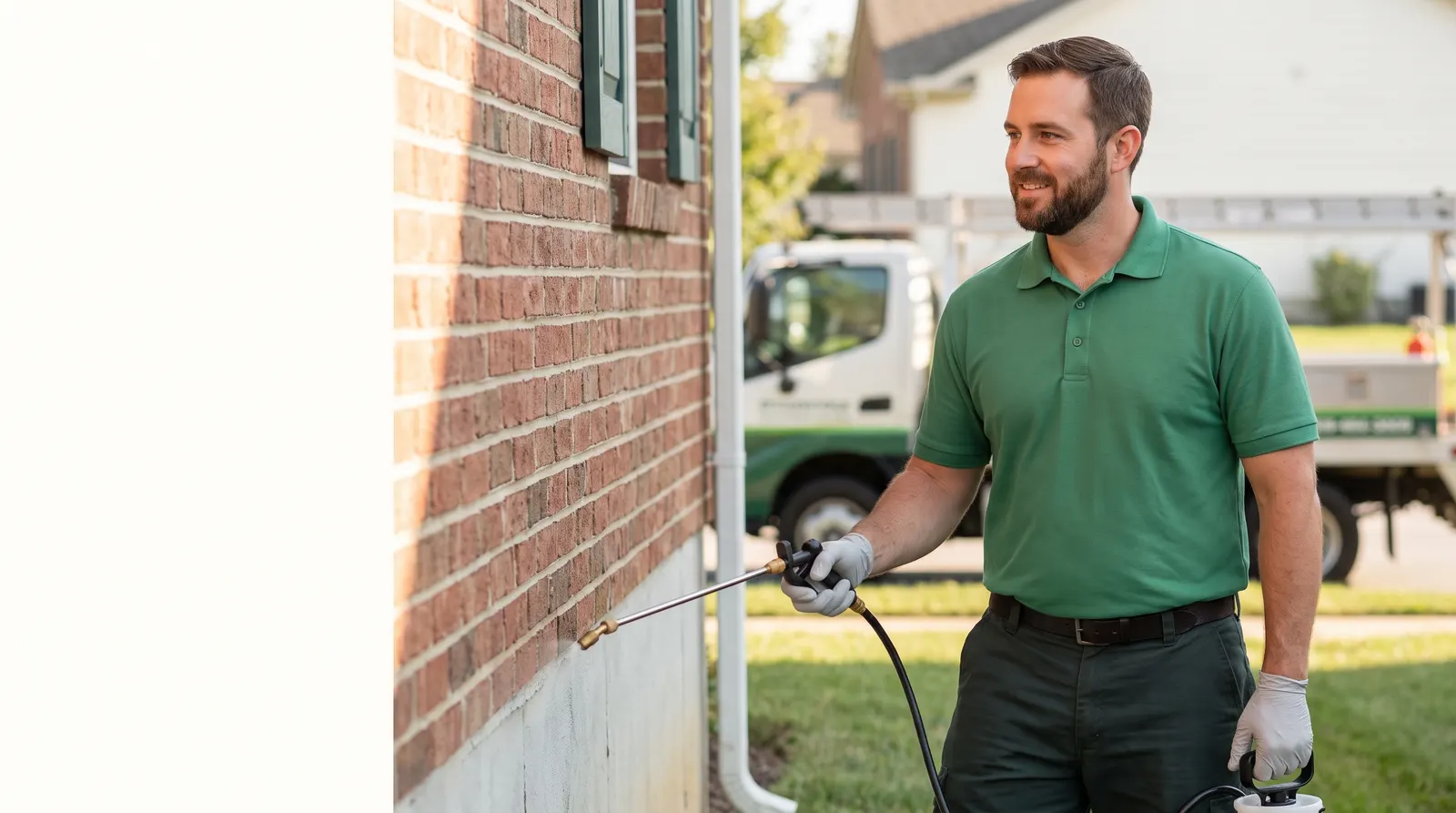
Pest control service in La Plata is a systematic biological management and structural exclusion practice that eradicates active infestations and establishes durable chemical and physical barriers around residential foundations.
Every service reflects the same meticulous attention to detail — whether it's a single job or a larger pest control service project across La Plata.
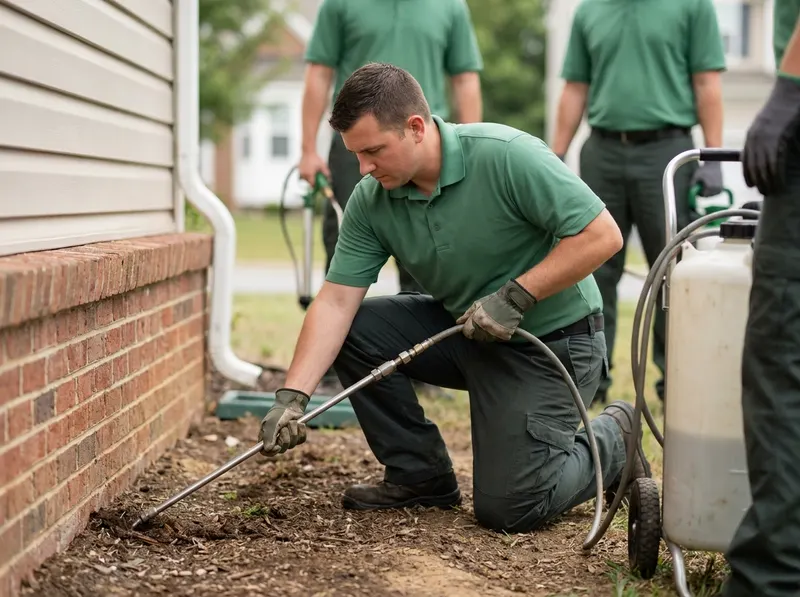
Subterranean termite defense provides continuous non-invasive monitoring, targeted soil trenching, and non-repellent liquid termiticide barrier injection around residential foundations. Termites in Southern Maryland establish massive subterranean colonies that travel upward through foundation expansion joints, hollow concrete masonry units, and plumbing penetrations to consume structural sill plates, subflooring, and wall studs. Treatment involves trenching perimeter soil along foundation stem walls, precision drilling attached garage slabs or masonry porches where required, and saturating the soil with high-bind termiticide formulations that foraging workers unknowingly carry back to eliminate the central reproductive queen. Follow-up includes ongoing visual inspection of foundation perimeters, electronic moisture tracking in crawlspaces, and exterior baiting station arrays that intercept exploratory worker termites before wood contact occurs.
View details →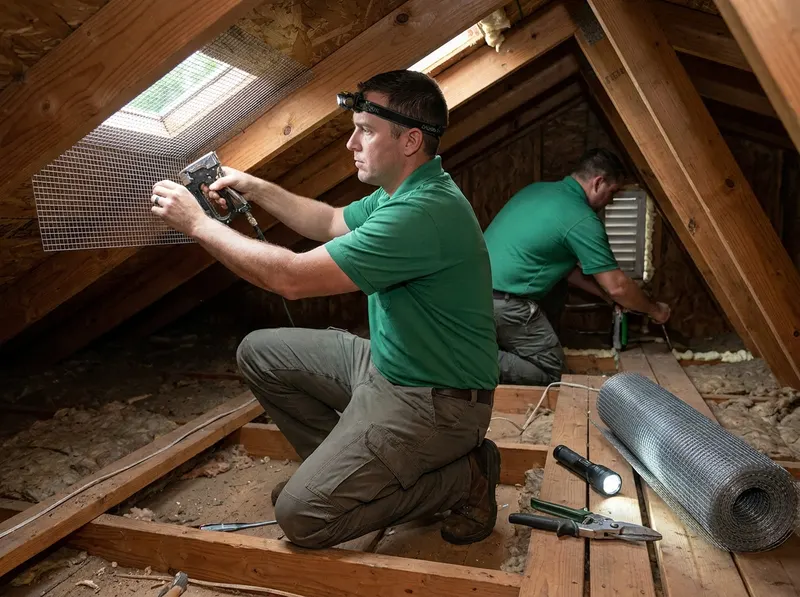
Residential rodent exclusion stops house mice, deer mice, and Norway rats from breaching exterior building envelopes and colonizing attic insulation or basement framing. Technicians conduct exhaustive structural assessments from foundation sill plates to roof eaves, identifying exterior gaps as small as one-quarter inch around utility conduits, HVAC lines, fascia boards, and crawlspace access doors. Remediation combines interior mechanical trapping, placement of tamper-resistant exterior bait containment stations, and structural sealing using galvanized steel wire mesh, metal flashing, and industrial-grade polyurea sealants that rodents cannot chew through. For heavily infested attics and crawlspaces, services include safe biohazard cleanup, localized anti-microbial sanitation of rodent urine and feces, and the extraction and replacement of soiled, compressed fiberglass insulation.
View details →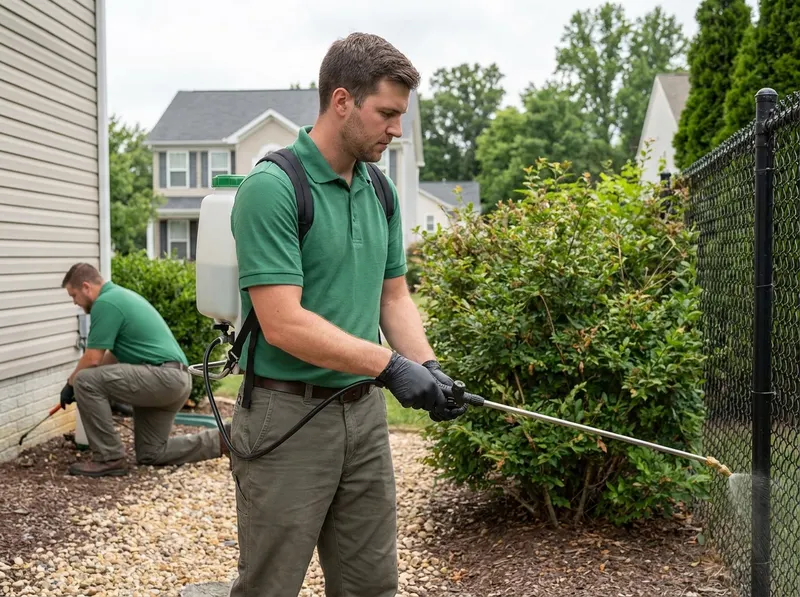
Mosquito and tick suppression establishes a protective botanical and microencapsulated chemical perimeter across exterior residential zones throughout the humid Southern Maryland warm season. Technicians target biological resting zones, focusing high-volume misting applications on the undersides of broadleaf plants, dense ground cover, shaded perimeter tree lines, and structural foundation overhangs where adult mosquitoes shelter during daylight hours. Concurrent tick treatments target leaf litter zones, property transition lines, and ornamental shrub beds where blacklegged deer ticks and lone star ticks wait for passing hosts. Treatments utilize water-resistant residual barrier compounds combined with insect growth regulators that disrupt larval development in standing moisture deposits, providing continuous population suppression for three to four weeks per application.
View details →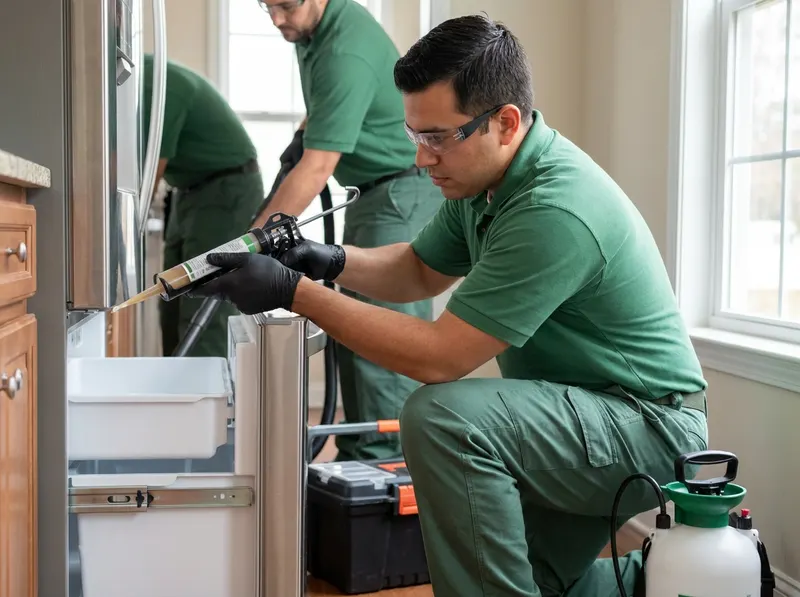
German cockroach elimination targets rapid-breeding indoor infestations that harbor inside kitchen cabinetry, behind major appliances, and within interior plumbing wall voids. Because German cockroaches reproduce exponentially and possess behavioral resistance to standard contact sprays, eradication requires a multi-faceted baiting and growth-regulation strategy. Technicians apply targeted micro-dots of high-palatability gel baits containing dynamic active ingredients directly into structural hinges, baseboard gaps, motor housings, and utility penetrations. Complementary applications of synthetic insect growth regulators prevent nymphs from maturing into reproductive adults, while targeted non-repellent aerosol flushing forces hiding populations out of structural voids into active bait zones without causing colony scattering to adjacent rooms.
View details →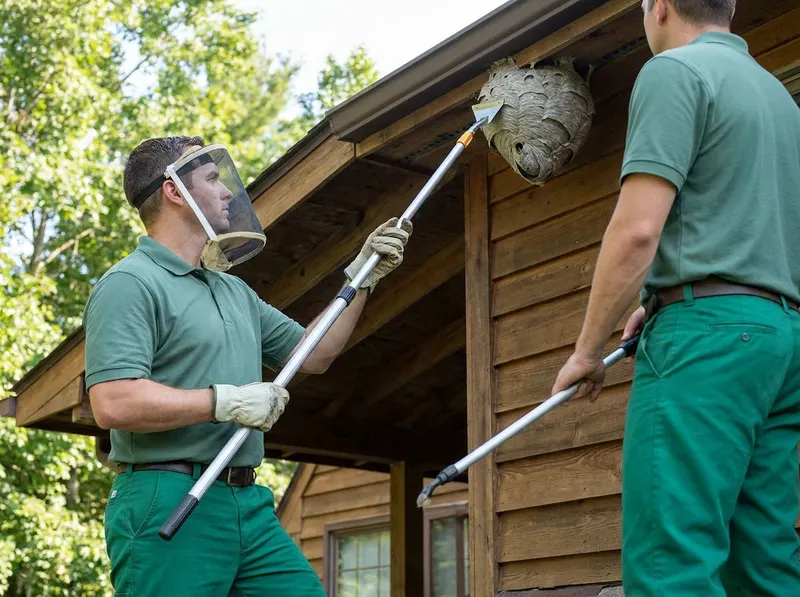
Stinging insect remediation safely neutralizes and physically extracts aerial bald-faced hornet nests, European hornet cavities, subterranean yellowjacket colonies, and paper wasp clusters from residential structures and landscape grounds. Nesting activity under eaves, behind attic louvers, within wall voids, or inside ground burrows poses severe sting hazards to occupants and pets. Technicians utilize protective containment gear, specialized telescoping injection wands, and fast-acting aerosolized knockdown agents to eliminate stinging insects within the nesting envelope. Once the colony is neutralized, technicians physically scrape and remove nest remnants, clean structural anchor points, and apply residual repellent treatments to the structural substrate to prevent scout queens from rebuilding on the same fascia or soffit.
View details →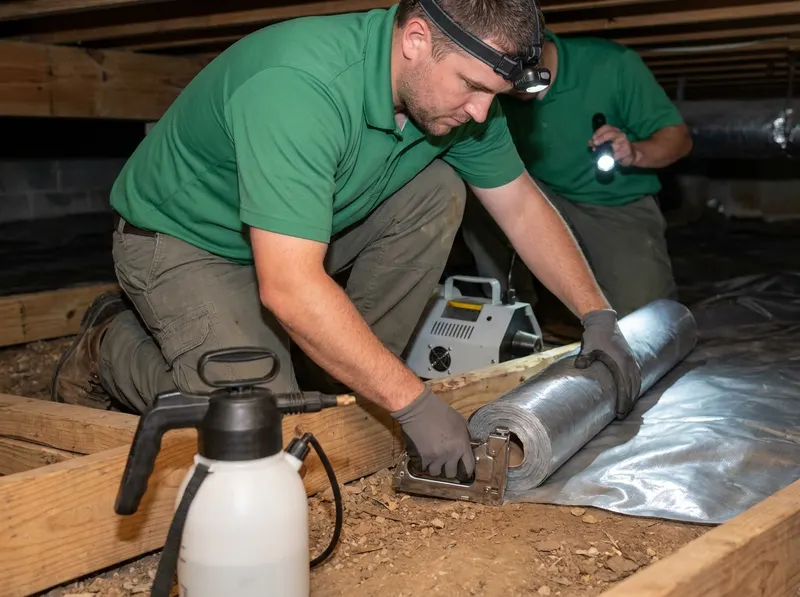
Crawlspace moisture defense stabilizes unconditioned foundation zones to halt persistent infestations of camel crickets, silverfish, wood-boring beetles, and fungal mold growth. Southern Maryland high soil moisture levels cause earthen crawlspaces to collect standing humidity, rotting structural floor joists and creating prime breeding environments for moisture-dependent pests. Technicians clear biological debris, install heavy-duty multi-mil reinforced polyethylene vapor barriers across the crawlspace floor, seal foundation vent openings against rodent intrusion, and apply targeted borate-based wood preservatives to subflooring framing. Long-term humidity stabilization stops wood decay fungi and eliminates the high-moisture harborage required by subterranean insect colonies.
View details →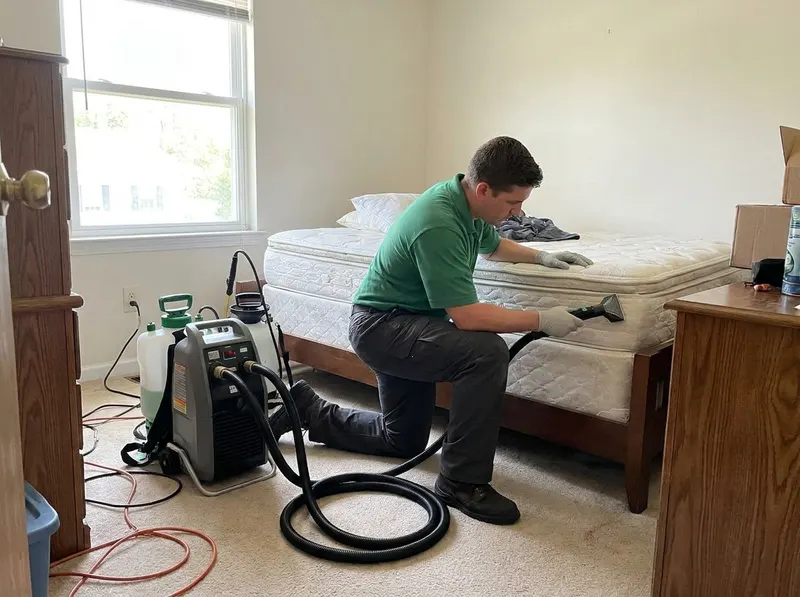
Bed bug remediation combines precision chemical contact agents, desiccating dusts, and targeted localized thermal treatments to eradicate bed bug populations across all developmental stages, including microscopic eggs. Technicians conduct meticulous visual and lighted magnification inspections of mattress seams, box springs, headboards, electrical faceplates, baseboard tracks, and upholstered furniture. Eradication protocols utilize non-staining residual sprays, insect growth regulators, and pharmaceutical-grade silica dust injected into structural wall voids and furniture crevices where bed bugs hide. Detailed preparatory guidance ensures personal belongings are handled safely, with comprehensive follow-up inspections scheduled to verify that entire biological life cycles are broken and living spaces remain clear.
View details →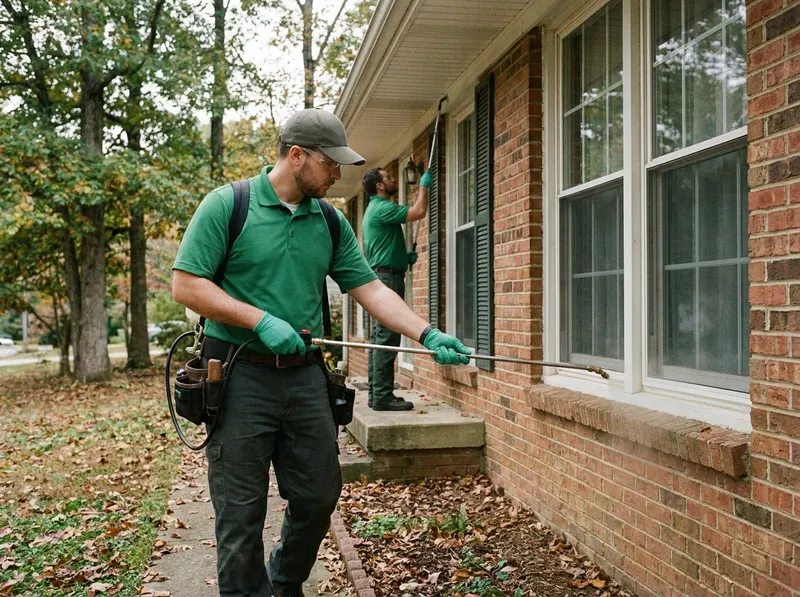
Overwintering pest shielding applies heavy-duty exterior residual barrier treatments to building envelopes in late summer and early autumn before invasive insects seek shelter inside wall voids. Brown marmorated stink bugs, boxelder bugs, and western conifer seed bugs gather in large numbers on warm exterior siding, metal flashing, and masonry before crawling through attic vents and window frames to hibernate. Technicians apply microencapsulated residual barriers across exterior window frames, soffits, eaves, chimney flashings, and sunny siding exposures. Sealing exterior gaps around trim and siding junctions prevents overwintering pests from penetrating living spaces during warm mid-winter days.
View details →Pest control service in La Plata is a systematic biological management and structural exclusion practice that eradicates active infestations and establishes durable chemical and physical barriers around residential foundations.
You get a firm, itemized quote for your pest control service before any work begins — no surprises, no pressure.
Careful prep, tidy work, and a full cleanup when we are done. We treat your home and belongings like our own.
The same trusted, background-checked team from the first call to the final check.
Selecting the appropriate structural defense protocol depends on whether pest activity is localized, structural, or seasonal across the property grounds. If property owners observe active subterranean mud tubes, sagging floor joists, or discarded swarm wings along sill plates and foundation headers, choosing targeted liquid termiticide trenching or localized subterranean baiting systems provides direct structural defense; the trade-off is a higher upfront diagnostic and installation investment compared to standard topical sprays, but it stops wood-destroying organisms from causing catastrophic structural failure. If attic scratching, gnawed electrical wiring, or droppings indicate mice or roof rats, choosing comprehensive mechanical exclusion, wall-void baiting, and soiled insulation sanitization addresses the root biological vector; the trade-off is requiring physical structural sealing of exterior flashing, rooflines, and crawlspace vents rather than relying solely on temporary interior snap traps. If outdoor living space is compromised by biting vectors between May and September, choosing microencapsulated barrier spraying across shaded vegetation delivers continuous seasonal relief; the trade-off is that Southern Maryland summer rain and humidity require scheduled re-treatments every three to four weeks. If invasive German cockroaches infest interior kitchen cabinetry, choosing precision insect growth regulators and non-repellent gel baits eliminates the reproductive cycle; the trade-off is requiring strict sanitation preparation and a multi-week follow-up cycle rather than a single surface application.
Every project gets a firm, written price after a free on-site visit. Ranges below for orientation.
Tell us about your pest control service job and we'll send a clear, written quote — usually the same day. Or just call and talk to a real La Plata pro.
(240) 901-9814
Properties throughout La Plata face specific biological pressure driven by dense coastal plain tree canopies, high summer relative humidity, and direct drainage into the Port Tobacco River and Zekiah Swamp watersheds. Historic wood-framed structures near the La Plata Train Station Museum and Charles County Courthouse, along with modern residential subdivisions off Route 301 and Route 6, encounter intense subterranean termite swarms each spring as soil temperatures cross 50 degrees Fahrenheit. The heavy clay soils prevalent across Charles County retain excessive subsurface moisture after seasonal storms, creating saturated conditions around slab edges and shallow crawlspaces. These damp foundations attract wood-destroying carpenter ants, camel crickets, and subterranean termites searching for structural cellulose. Furthermore, residential properties bordering rural agricultural acreage or wooded greenbelts near Tilghman Lake Park, Wills Memorial Park, and the College of Southern Maryland La Plata Campus face persistent rodent pressure as mice and rats migrate toward heated residential basements and attics every autumn.
Free estimates for La Plata & the surrounding area.
 Stonebridge Pest Defense Services